42. The Form is the Story in Steven Soderbergh’s Presence
Plus: books about running and flying, movies about fashion, and songs to listen to while grilling!

In October 2023, I wrote a quick blog post on Wes Anderson’s just released short films based on four Roald Dahl short stories called “The Distillation of Wes Anderson’s Creative Project.” In that post, I argued that, taken together, those four films felt like the summation of everything Anderson had been working towards over his career. In short, under tight constraints with limited actors, the increased set design and artificiality of his films became part of the storytelling in a clearer way than we’ve seen before.
I was reminded of that post last month while watching Steven Soderbergh’s recent film, Presence. Like Anderson’s short films, Presence, for me, felt like a distillation of Soderberg’s process over the last decade. Billed as a supernatural thriller, Presence follows a family as they move into a new house that is haunted by, well, a…presence. The entire film is shot from the perspective of this supernatural being: we see what they see, from their perspective. We roam around the house, we eavesdrop on intimate moments, and overhear conversations. There’s family drama around the edges but the emotional anchor of the story is the family’s teenage daughter, who early on, becomes aware of the presence in the house. (In a startling moment early in the film, she looks directly at the camera — which is to say: directly at the ghost, directly at us— as it pulls back quickly as if surprised by the gaze.)
I sometimes think Soderbergh might be my favorite director. I’m in awe of his productivity (he seems to have a new movie every few months) but I’m also in awe of his range from big budget summer films like the Oceans films to weird indies like The Girlfriend Experience or Full Frontal. He’s both wildly experimental yet firmly mainstream. Films like Contagion, The Informant!, and The Limey I’ve seen many, many times. I always enjoy watching how he plays with genre, subverts expectations, and challenges modes of storytelling: all of which is on display in Presence.
In early 2013, Soderbergh announced he was retiring from making movies. That “retirement” didn’t last long. By May of that year, he was directing the ten-part mini-series The Knick. I’ve always sensed working on the two seasons of The Knick — which he not only directed but also shot and edited himself (often actually holding the camera) — changed how he made movies when he returned in 2016 with Lucky Logan. The sensibilities of his later films were refined on the grueling production schedule of a ten-episode series. In The Knick, we see extreme camera angles, natural lighting with tightly framed images, industrial soundtracks, and dialogue that’s cut with unusual camera placement.
The films he’s made since returning to filmmaking vary wildly in tone (and quality) but they all feel like he’s experimenting with the ideas he explored on The Knick: how can he make a film in the most economical and artistic way possible. (In Unsane and High Flying Bird, for example, he used an iPhone to shoot the entire film.) As he’s often behind the camera, in real environments, we see him move between playful and static camera work. Maybe he places the camera low to the ground looking up at a person (or vice versa, where the camera almost feels too high as it looks down) as we see often in his HBO series, Mosaic. Other times it’s tight against a wall with the walls angles pulling us into the scene like in Let Them All Talk. My favorite Soderbergian gesture is when he places the camera through glass as if we’re inside looking out at a scene or vice versa, as if the camera is a fly on the wall, catching something it’s not supposed to. In all of these moves, the viewer becomes aware of the camera and how it frames what we’re seeing.
This is the trick he reveals in Presence because the camera is not just a camera, it’s the main character. And because we’re watching the film through this point of view, the camera is also us. Here these angles, positions, and framing are not just artistic devices but storytelling devices. It’s the same thing with Wes Anderson’s short films a few years ago: the form becomes the content.
Presence is not Soderbergh’s best film, nor would I call it a personal favorite. But what I liked about it was how, as a follower of his work for decades, I could see how the lessons he’s learned, the experiments he’s made, found a new usefulness here. It was a treat to see Soderbergh do his Soderbergh thing in a distilled way. If anything, I was surprised he hadn’t made a film like this earlier.
It got me thinking about this intersection between form and content that graphic designers talk about. I’m increasingly convinced this is a divide only graphic designers think about. When I teach students from other majors — industrial design, architecture, animation — this idea if foreign to them. The form is the content. The content is the form. Soderbergh has always operated that way. In Presence, it’s never been more obvious.
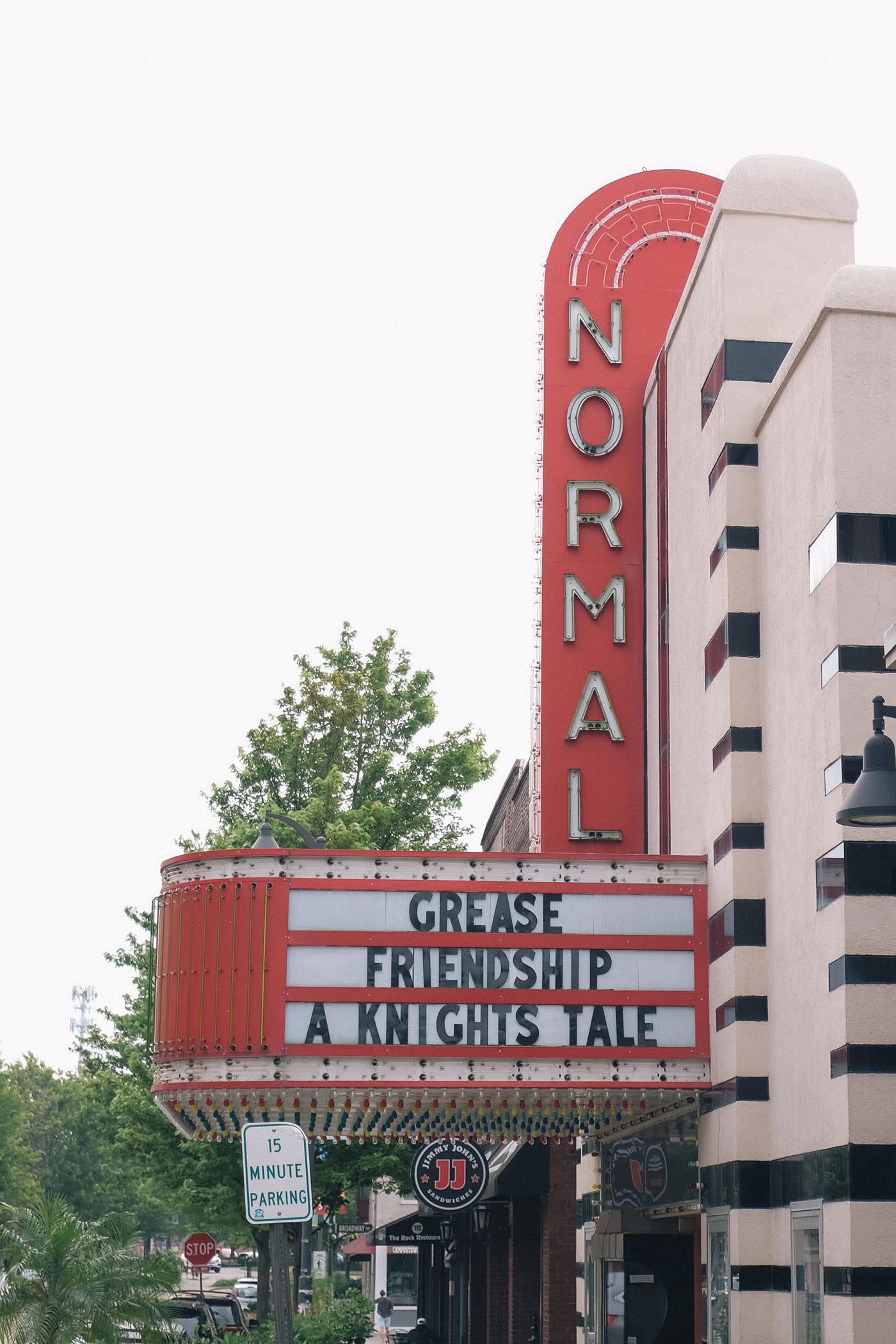
Despite my summer schedule, it’s been a busy few weeks. I finished up a round of edits for my upcoming book (more on that soon, coming next year!) and was in Normal, IL for a the AIGA Design Educators Conference, where I presented two papers. The first was on the publishing course I’ve been teaching here at NC State for the last few years that I think speaks to some interesting ideas about reframing how we talk about design in this moment. The second was a speculative structure for thinking through changes in design education that I’ve been working on the last few years. The reception to both was great and resulted in some smart conversations about how we teach design today. I’m working on getting those published online soon.
For Fast Company, I interviewed David Reinfurt about his new book, A *Co-* Program for Graphic Design, a follow-up of sorts to his 2019 book, A *New* Program for Graphic Design. Both of these books are based on the courses he’s been teaching at Princeton for the last decade and raise all sorts of questions for me about design education, technology, culture, and what graphic design even is anymore. Our conversation was wide-ranging, covering ideas in the book but also thinking through why we both still hold onto this term “graphic design”.
I’m starting to prep for the new season Scratching the Surface. Look for new episodes in September. Until then, remember you can sign up for our newsletter where we publish The Monthly Dispatch, a monthly roundup of design news that is free for everyone, as well as regular bonus interviews available for paying subscribers.
On my daily morning run last month, I listened to Ben Ratliff’s new book Run The Song: Writing About Running About Listening, a really lovely meditation on running, music, and criticism. Ratliff is one of our most astute music critics and I appreciated learning about how he listens to music and how running has influenced how he listens to music. As a runner, a music-listener, and a writer, it felt like this book connected so many of my interests in ways I wasn’t expecting.
I also just finished the first volume of Tokyo These Days, the three-part manga by Taiyo Matsumoto. I’m not a manga reader but Robin Sloan’s recent endorsement had me immediately request it from my library:
Tokyo These Days is, very directly, an epic of the editor. It is peopled with artists — wacky and surly, prickly and charming, everything in between — but the character at the center; the hero, unmistakably; is an editor.
The dramatization of this editor’s many relationships, cultivated over decades, is detailed and humane, funny and sad. More than once, this manga made me cry. It’s one of the most beautiful pieces of work I’ve encountered, in any medium, in many years, and for me it is elevated by the precision of its attention — the way Taiyo Matsumoto wants to insist: this job is central. This person is central. These people have been central, to me and my career.
Like Robin, I couldn’t help but reflect on editing while reading it. As someone who is edited all the time and sometimes moonlights as an editor, I’ve come to realize that the relationships with my editors are hands down the best working relationships I have ever had. Nowhere else have I worked with people in a condition of mutual respect, trust, and rigor. I owe so much, especially, to Liz Stinson, Maddy Morely, Tiffany Jow, and Meg Miller. They helped me make my best work and I’m so, so deeply grateful for these relationships. I love every time I get to talk with them. I hope I do for the writers I’ve had the privilege to edit what they’ve done for me.
Which is to say: go find people to work with like them, go find a good editor, go read Toyko These Days.
I read everything New York Times critic Wesley Morris writes so I was very excited to see he was getting his own weekly podcast, Cannonball, featuring conversations about culture. The first two episodes were about topics I have no investment in — Bruno Mars and Sean Combs — but still found them fascinating. I’ve been reading Morris for the better part of a decade now and never tire of watching his brain work. Listening to these conversations it’s clear he consumes media in a way I wish I could — making connections, peeling back layers, and probing his own reaction to what he’s consuming. This is easily going on my weekly must-listen rotation.
Speaking of consuming culture, I binge watched the two seasons of Nathan Fielder’s The Rehearsal last month and feel like I haven’t stopped thinking about it since. What is it? Am I watching a reality show? Performance art? A massive trick? A meta-commentary on storytelling? I’m not sure! But it captures so many things I’m interested in: reflexive storytelling, the blurring of reality and fiction, and, in the second season: flying. The pitch is that Nathan helps participants rehearse for important moments, conversations, or events in their life and each episode starts there but quickly loops, diverges, and doubles down on the premise. It’s wild and I haven’t seen anything else like it. I liked Alexandra Tanner’s essay about the show — and Fielder’s whole project — over on The Point and Gideon Lewis-Krauss’s review of the finale in The New Yorker. (I’ve continued consuming content about flight since the show ended, too, reading (and in some cases rereading) the archives of William Langewieshe, the great flight journalist who recently died at 70, and finally getting around to Mark Vanhoenacker’s Skyfaring, which is so delightful.
Thanks to the Criterion Channel, I also finally got to watch Wim Wender’s 1989 documentary Notebook on Cities and Clothes, a documentary about Japanese fashion designer Yohji Yamamoto, that’s been on my list for a long time. Part documentary, part travel journal, part film essay, this was a great look into a creative process and the thinking that goes into putting together a fashion collection. I’ve been trying to learn more about the fashion industry for the last few years and found this a charming addition to the genre.
On reading, Alexander Chee’s recent Substack post about how to know what to read paired nicely with Moyra Davey’s The Problem of Reading, an essay I hadn’t read before but was turned on to from Ben Ratliff’s aforementioned book (which I didn’t read but listened to!).
The architectural historian Reinhold Martin has become a recent favorite writer of mine over the last few years. His recent piece in Places, on the United States Interstate System was fascinating.
In the Yale Review, Garth Greenwell’s essay on offense in art was provocative and true, using Miranda July’s novel All Fours, to talk about how we respond to art that troubles us. (For some reason, it reminded me of his essay from a few years ago on “relevance” in art that I ended up assigning to my writing students for a years when I was teaching design writing).
Virginia Postrel, one of our most insightful cultural critics, connects future thinking and glamour in a way I haven’t seen before. (Glenn Adamson covers some of this in his book, A Century of Tomorrow, but not quite from the same angle — my review of that book is here.)
Let’s wrap up with some music recommendations, shall we? The new John Roberts’s album Regarding Film hits all my music sweet spots. On the other end of the spectrum, Hotline TNT’s new album Raspberry Moon and Turnstile’s NEVER ENOUGH are what I’ve been putting on when I need something loud.
I’ve been making playlists every summer for the last few years over on Spotify. Two years ago I made Garden Songs, a collection of electronic Moog-ish songs inspired by my garden. Last summer, I made Settling, an acoustic-driven ambient album that felt like a soundtrack for back porch-sitting. This year’s is slightly different: Water Folk is a new collection of jangling folk rock music that has been my grilling in the backyard for the last month. It sounds like the heat. Pick what works for you.
Speaking of grilling, it’s time to head out and start the chicken I’ve been marinating all day. I have more projects in the works that I’ll hopefully be able to talk about soon. Until then, thanks for following along.
See you soon,
Jarrett